-ACCELERATION OF THE SUPERCONTINENT CYCLE-

-Why the acceleration of the supercontinent cycle is central in understanding Earth Plate tectonics?
Acceleration of the supercontinent cycle is not a new idea from the millennial, nor my idea. At the dawn of the supercontinent cycle, researchers already hypothesised the acceleration based on a very trivial observation of the timing of supercontinents occurrences in the past (Pangea, at -300 Myr, Gondwana, at -600 Myr, Rodinia, at -1,000 Myr and Columbia, at -1,800 Myr). These four supercontinents already suggest that the repetition of assemblies could fasten towards modern times. However, it was a very speculative idea, as the evidence of all supercontinents were still to be shown and published. In 2025, this question is far from being resolved as new parameters have now influenced our understanding of Plate tectonics and the supercontinent cycle. How does these new researches help us to solve this question? Let’s try to investigate it through few recent papers.
The existence of Rodinia and Columbia have been supported since 1988 (Cawood et al 2016, Zhao et al., 2002), enhancing the beliefs of the geoscientists in the supercontinent cycle as a strong and complete theory in Plate tectonics. These two supercontinents are observable in the geological records as two events that shaped greatly the Earth evolution. Nowadays, no scientists would question the existence of Rodinia and Columbia as true supercontinent in Earth plate tectonics history. The supercontinent Gondwana has followed a much more complicated path since 1988. Indeed, the community has become clearly fragmented over the existence of Gondwana as a true supercontinent (Nance et al., 2022). However, Gondwana (Pannotia, in the new literature) was one of the first supercontinent to be recovered at around -600 million years to -500 million years, but its existence has since been challenged deeply. As already developed by some authors, the existence of Gondwana or not is a much more central question than the scientific community tends to consider (Figure 1, article Pannotia: To be or not to be?). Scientists should address this question, instead of eluding the scientific problem.
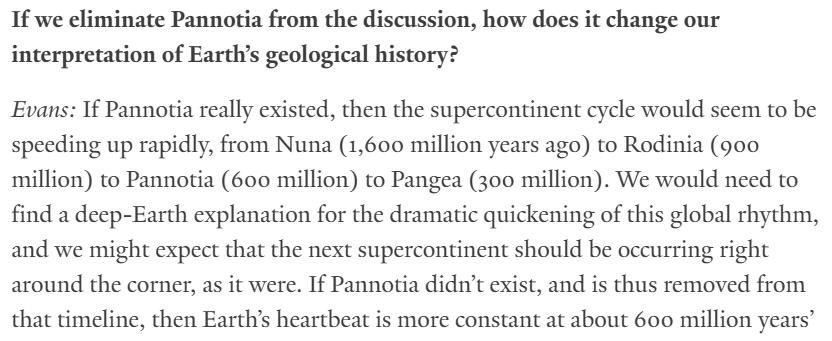
article online
Avoiding Gondwana as a true supercontinent in the cyclicity is strong advocate of the 600 Myr and the 800 Myr cyclicities (Mitchell et al., 2021 and Zhao et al., 2018). The 600 Myr cyclicity is based on paleomagnetism and true polar wander which only recovers Columbia and Rodinia connected to Pangea. The 800 Myr cyclicity is based on a solid analysis of the geological records (metamorphism, paleogeography, etc.) and recovers Columbia and Rodinia and hypotheses a much older supercontinent called Kenorland at -2,500 Myr (All connected to Pangea in the sequence). The 500 Myr cyclicity is the based on the Wilson cycle theory and considers Gondwana a true supercontinent but fails to maintain a 400 to 500 Myr cyclicity throughout the Earth history (Pangea, at -300 Myr, Gondwana, at -600 Myr, Rodinia at -1,000 Myr, a supercontinent at -1,500, Columbia at -1,800 Myr and Kenorland at -2,500 Myr). Finally, considering Gondwana in the cyclicity mathematically leads you to the acceleration of the cycle… This was pointed out by Condie and Aster in their paper in 2013 (Figure 2), suggesting that the acceleration is a trivial question but yet having no scientific proof of it.
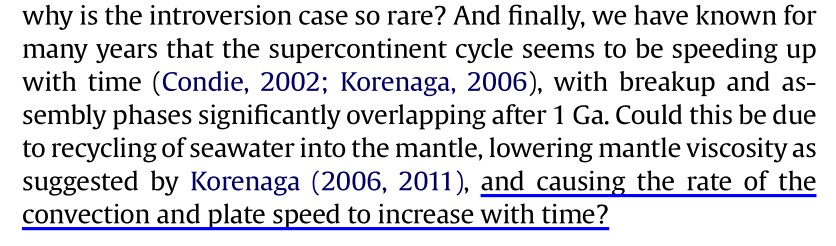
It is in 2022, almost ten years after their paper, that I came up with some clues about a possible acceleration of the supercontinent cycle (Figure 3). Based on a mathematical analysis of the occurrence of the supercontinent in history and considering Gondwana as a true supercontinent, I was able to recover a mathematical equation that can recover the acceleration of the supercontinent cycle (-2,000, -1,000, -540, – 260, -40 and +160 Myr). This equation can integrate Gondwana in a coherent sequence of assemblies, opening a possible solution to the existence of Gondwana as a true supercontinent? Although the paper is compelling, there are new problems to be addressed.
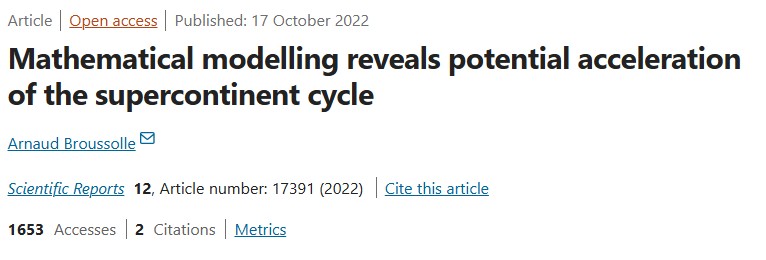
Indeed, the fragmentation of the scientific community was mostly occurring because of the impossibility to fit Gondwana in the supercontinent cycle. Therefore, scientists had found ontological solutions to decipher the supercontinent cycle. As always, the discovery of the acceleration of the supercontinent cycle comes with new scientific problems in the Earth Plate tectonics evolution. Has it merely shifted the scientific problems, or is it a potential solution? Indeed, the cyclicity consider Eurasia at -40 Myr as a putative supercontinent. Luckily, Eurasia had been recently considered as a megacontinent by Wang et al., 2019 (Figure 4), but considering it as a supercontinent is far more intriguing and doubtful!
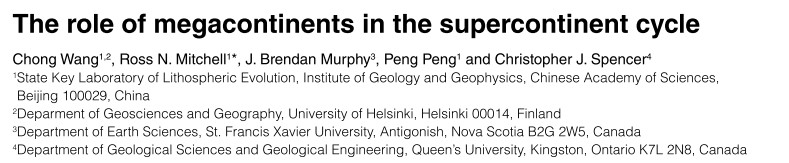
While trying to publish the paper, I realized that this finding is much more controversial than any other paper that I have been reading about in geology. The megacontinent hypothesis fits the 600 Myr cyclicity and thus does not change deeply our understanding of Plate tectonics (Still has its limits…). However, the acceleration of the supercontinent cycle completely redraws our understanding of Eurasia and its connection to the supercontinent cycle. Finally, the acceleration predicts the next supercontinent at +160 Myr in the future, much earlier than common prediction at +250 to +500 Myr in the future. Many new questions to be addressed.
Conclusion:
In this short article, we have seen that the question of the acceleration of the supercontinent cycle has advanced but is still not solved. Has the finding of the acceleration of the supercontinent shifted the problems in Earth Science, or does it propose a coherent solution to the supercontinent cycle? Is the supercontinent Gondwana rightfully back in the sequence of the supercontinents?
References discussed:
Cawood et al 2016
Zhao et al., 2018
Zhao et al., 2002
Nance et al., 2022
Mitchell et al., 2021
Condie and Aster, 2013
Broussolle, 2022
Wang et al., 2020
Article du 13 mars 2026
The question about the acceleration of the supercontinent cycle is still highly debatable. However the paper published in january 2026 in Earth Science Reviews can shed light on the process.
https://www.sciencedirect.com/science/article/pii/S0012825225002818
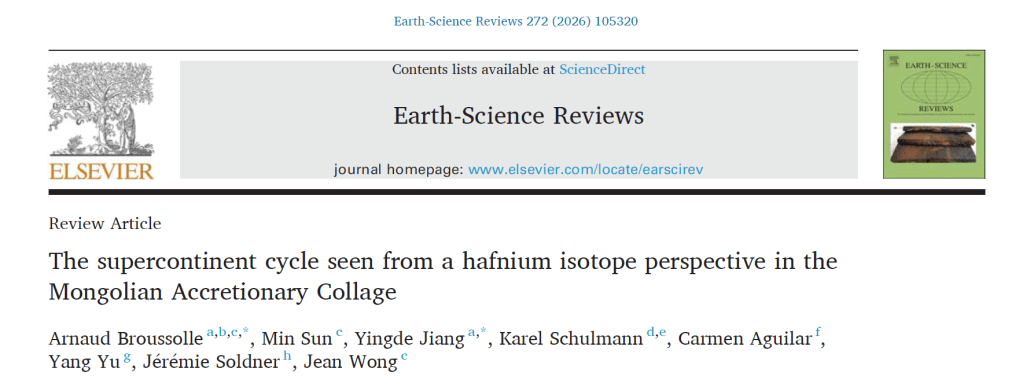
This paper proposes the first holistic model of the supercontinent cycle, by holistic I mean the complete and sound evolution of the supercontinent cycle but it isn’t a holistic methodology. The paper is based on the methodology developed in my book where I adress the question: How to find the model of the supercontinent cycle? I explored the use of reductionism strategy against a holitistic methods (Chapter 3, Exploring the Theory of the Supercontinent Cycle)
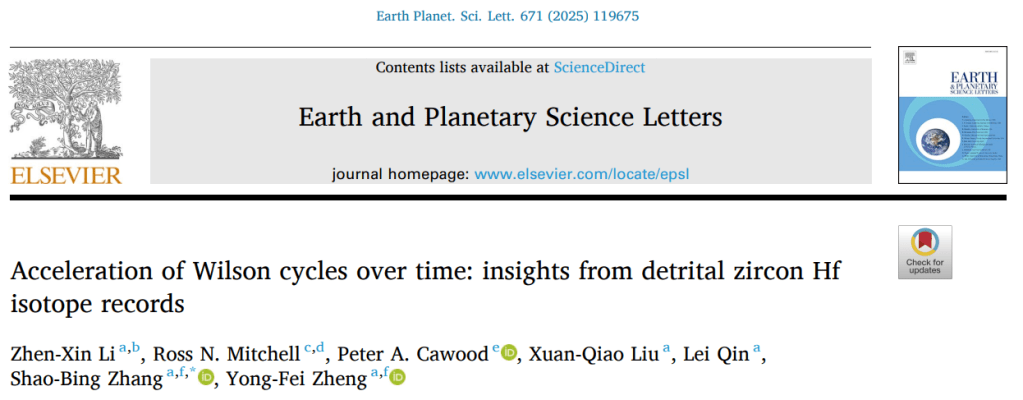
First of all, there was an other paper published in 2025 that also suggested the acceleration of the Wilson cycle. This acceleration could be linked to the acceleration of the supercontinent cycle as the authors proposed. This idea bring a new evidence since my first paper in 2022. They recovered that the duration of the Wilson seems to diminish towards younger time, going from 400 Myr to 230 Myr to finally 120 Myr. In my 2022 paper, I recovered accelerating supercontinent cycle from 1000 Myr to 460 Myr to 280 Myr and 220 Myr. In addition, they proposed that the acceleration is due to the cooling of the mantle through time, which evidences are numerous in literature. Indeed, it is well know that the Earth is cooling down, as exemplified for the mantle temperature that decrease 200 °C since the Proterozoic: » secular trend is supported by global geological records of the Wilson cycles in different eras, suggesting an acceleration of plate tectonics in response to the cooling of Earth’s convective mantle ».
The paper is interesting when connected to my paper in published in 2026. In this contribution, I propose an alternance of advancing- and retreating modes that can be linked to the assemblies of the different supercontinents. In this paper, the periods of advancing- and retreating-modes are also diminishng in duration through younger times. Therefore, it seems to show that thereis indeed an acceleration of Earth’s processes through younger times. In addition, these subduction styles switch at the assembly of the Columbia, Rodinia, Gondwana and Pangea supercontinent, which have shorter and shorter supercontinent cycle. In the paper, we also hypotheses the subduction style from Pangea to Pangea Proxima inculding the assembly of the Eurasia supercontinent.
In my previous works in 2022 and 2024, the idea of acceleration was only a speculation (Condie et al., 2015; Broussolle, 2022) , without any models to back up the saying. In 2026, a potential model can be associated to the acceleration, leading to consider that the extroversion could be the main mechanism explaining the assembly of supercontinents (Broussolle et al., 2026). When we consider plate tectonics as functioning and that there is only external ocean on Earth, the acceleration of the cycle matches well the model of extroversion.
An other paper was just published, which proposes that the supercontinent controls the rythm of the metallogenic record. Interestingly, he observed that the rythm seems to shift and accelerate through time: « Together, these observations indicate that secular mantle cooling drove progressively faster cycles of continental assembly and dispersal as modern-style plate behavior became established. » This paper is really interesting as he used three different datasets than the one I used in my previous papers (Broussolle, 2022, 2024). Therefore, there are now 8 datasets that seem to support an acceleration of the supercontinent cycle.
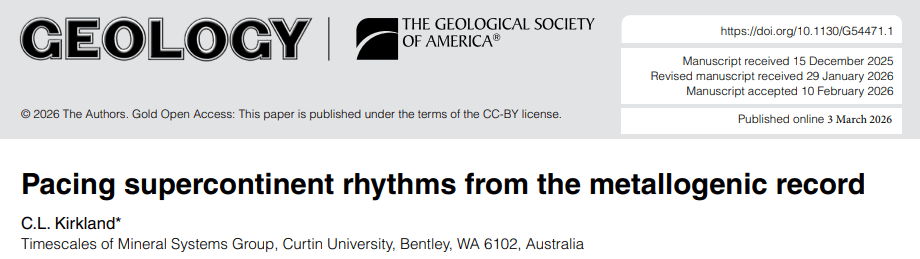
Maybe the researcher was not aware of my contribution, as I was not cited. Nevertheless, this is a second convincing evidence that the cycle might accelerate (Li et al., 2025 and Kirkland, 2026). I am very enthusiastic that new papers will be published showing that the cycle accelerates. Are we finally trending and going towards a holistic understanding of Earth’s plate tectonics evolution? Could the acceleration of plate tectonics explain intrinsic evolution of Earth? Could it be the model that fit the supercontinent cycle? What are the reasons for this acceleration could be the new golden question in Earth Science. Time will tell.
References:
Broussolle, A., Sun, M., Jiang, Y., Schulmann, K., Aguilar, C., Yu, Y., … & Wong, J. (2026). The supercontinent cycle seen from a hafnium isotope perspective in the Mongolian Accretionary Collage. Earth-Science Reviews, 272, 105320.
https://www.sciencedirect.com/science/article/pii/S0012825225002818
Li, Z. X., Mitchell, R. N., Cawood, P. A., Liu, X. Q., Qin, L., Zhang, S. B., & Zheng, Y. F. (2025). Acceleration of Wilson cycles over time: insights from detrital zircon Hf isotope records. Earth and Planetary Science Letters, 671, 119675.
Kirkland, C. L. (2026). Pacing supercontinent rhythms from the metallogenic record. Geology.
 Arnaud Broussolle personal website
Laisser un commentaire